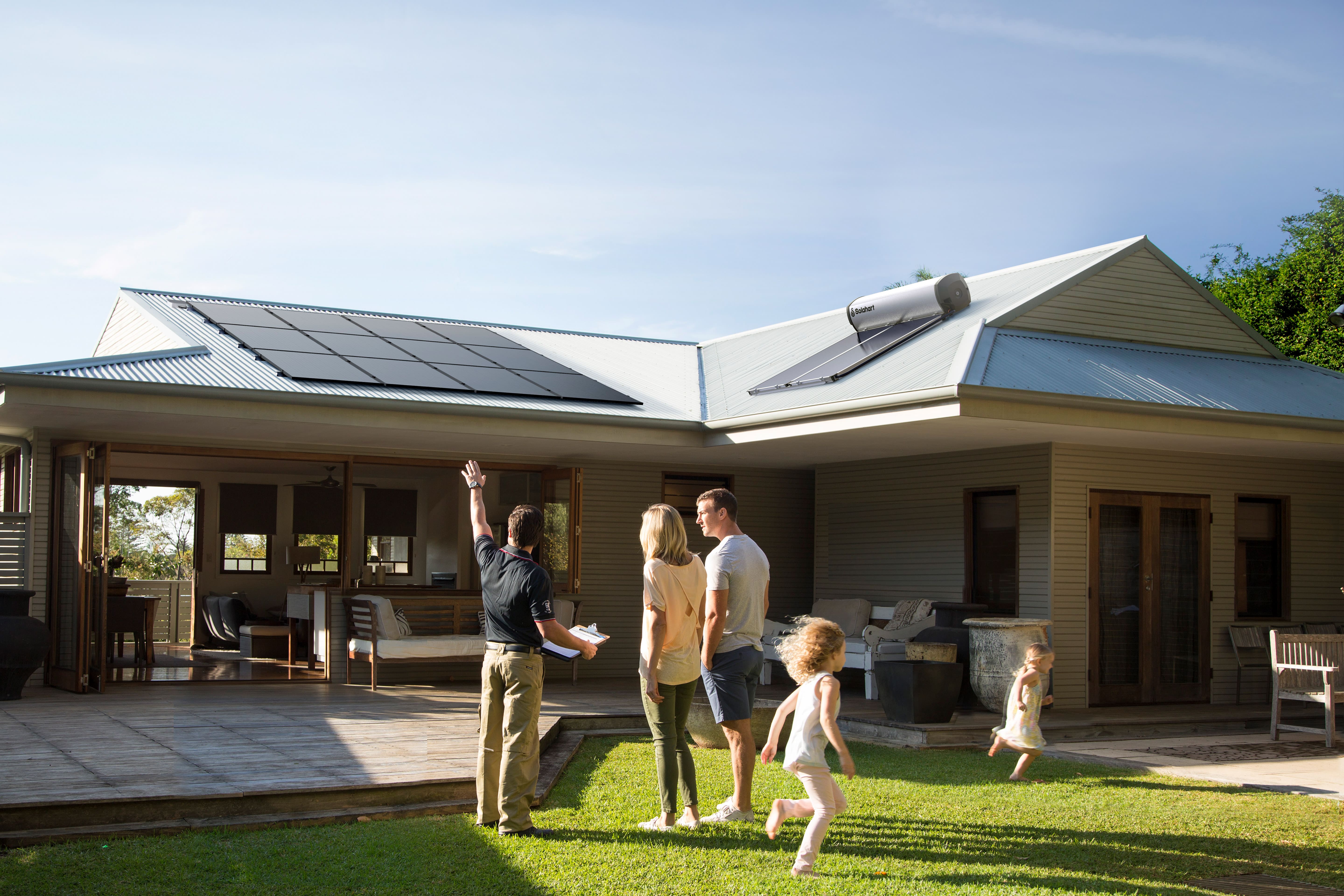
When it comes to getting the most out of your solar panel system, orientation and tilt angle matter far more than many homeowners realise. As we move through 2026, understanding these fundamentals can help you assess whether your installation is truly optimised for your home's location and climate zone.
At Solahart, we've been helping Australian families harness solar energy for decades. We know that the difference between a good solar installation and a great one often comes down to the finer details of how panels are positioned on your roof.
Understanding Solar Panel Orientation
Solar panel orientation simply means the direction your panels face. In Australia, homes in the Southern Hemisphere benefit most when panels face north. This is because the sun moves across the northern sky throughout the day, and north-facing panels capture the maximum amount of direct sunlight.
However, real-world installations don't always work out perfectly. Some homes have roof designs that make true north-facing installation impractical. Others may have shading issues that complicate placement decisions. East or west-facing orientations are sometimes necessary compromises, though they typically generate less energy than ideal north-facing installations.
If your home was fitted with solar panels several years ago, it's worth checking your orientation. Modern technology and installation practices may offer better options if you're considering an upgrade or expansion to your system.
The Role of Tilt Angle in Performance
Tilt angle refers to how steeply your solar panels are angled relative to the ground. This is separate from orientation and equally important for performance optimisation.
The ideal tilt angle for Australian homes generally matches or comes close to your latitude. For example, homes in Sydney around 34 degrees south latitude would ideally have panels tilted at approximately that angle. Brisbane at around 27 degrees south would benefit from a shallower tilt, while Melbourne at 38 degrees south would use a steeper angle.
This isn't just a matter of capturing sunlight. The optimal tilt angle ensures that sunlight hits your panels as directly as possible throughout the year, maximising energy production during both summer and winter months.
Many roof installations use a fixed tilt angle determined by the roof pitch itself. While this is practical and cost-effective, it may not be perfectly optimised for your specific latitude. The team at Solahart Shoalhaven can assess whether your current tilt is working efficiently for your location and discuss whether adjustments might improve performance.
Seasonal Variations and Year-Round Performance
Australia's seasonal changes affect how solar panels perform. Summer brings longer days and higher sun angles, while winter offers shorter days and lower angles. A tilt angle that's optimal year-round represents a compromise between these extremes.
Some homeowners wonder whether adjustable tilt systems make sense. While theoretically possible, most residential installations use fixed angles because they're more practical, require no maintenance, and generally deliver strong results across all seasons.
The key is ensuring your fixed angle was calculated correctly for your area. Solahart Shoalhaven can help you verify that your system's tilt angle aligns with best practices for your location and roof design.
Assessing Your Current Installation
If you already have solar panels, you might be wondering whether they're optimally positioned. Several factors worth considering include:
Your roof orientation and pitch, which largely determines what's possible for your home
Any shading from trees, buildings, or other structures that might affect panel performance
Whether your installation was designed specifically for your latitude and location
The age of your system and whether modern installation techniques might improve positioning
If your panels are more than a few years old, installation standards may have evolved. Newer approaches to orientation and tilt angle optimisation might be worth exploring, particularly if you're planning to expand your system.
Planning for New Installations in 2026
For homeowners considering a new solar installation in 2026, the good news is that experienced installers have refined their approach to orientation and tilt angle optimisation. Modern systems are typically designed with careful attention to your specific property and latitude.
When getting quotes for solar installation, discuss orientation and tilt angle explicitly. Ask whether the proposed design is optimised for your latitude and roof configuration. Good installers will explain their reasoning and show you how panel positioning will affect expected performance.
The team at Solahart Shoalhaven takes this seriously, ensuring that every installation meets rigorous standards for positioning and performance.
Taking the Next Step
Whether you're assessing your current system or planning a new installation, getting professional advice about orientation and tilt angle makes sense. Small differences in positioning can accumulate into meaningful differences in energy production over the life of your system.
Solahart's commitment to quality extends to these crucial installation details. We believe that Australian homeowners deserve solar systems designed and installed to perform at their best.
Ready to discuss your solar setup or explore whether optimisation improvements might benefit your home? Contact Solahart Shoalhaven today for a free assessment and quote. They'll review your specific situation and help you understand whether your system is positioned for optimal performance in 2026 and beyond.
Energy savings vary depending on household usage and location.